Retatrutide vs Tirzepatide
Both are engineered incretin peptides. Both engage two of the same receptors. One engages a third. This guide sets out what is actually established about each, what the published trials measured, and where the evidence genuinely differs — without pretending a comparison exists that hasn't been run.
Quick answer
No, they are not the same compound. Tirzepatide is a dual agonist: it binds the GLP-1 and GIP receptors. Retatrutide is a triple agonist: it binds GLP-1, GIP and the glucagon receptor.
That one additional target is the entire structural difference, and it is also why they sit at different stages of development. Tirzepatide has completed Phase 3 trials and is approved as a finished pharmaceutical in several jurisdictions. Retatrutide has published Phase 2 results with Phase 3 trials still running.
No head-to-head trial comparing the two has been published. Any source ranking one above the other is comparing across separate trials with different designs, which is not a valid comparison.
What this guide covers
- Quick answer
- Side-by-side comparison
- What is retatrutide?
- What is tirzepatide?
- Mechanism: dual vs triple agonism
- Why the glucagon receptor matters
- Why researchers compare them
- Published research overview
- Body composition research
- Glucose and metabolic research
- Reconstitution and storage
- Where to buy
- The studies
- Frequently asked questions
Side-by-side comparison
| Retatrutide | Tirzepatide | |
|---|---|---|
| GLP-1 receptor activity | Yes | Yes |
| GIP receptor activity | Yes | Yes |
| Glucagon receptor activity | Yes | No |
| Receptor targets | Three | Two |
| Peptide length | 39 amino acids | 39 amino acids |
| Half-life extension | Fatty acid, albumin binding | C20 di-acid, albumin binding |
| Development stage | Investigational — Phase 2 published, Phase 3 running | Approved as a finished pharmaceutical in multiple jurisdictions |
| Human trial evidence | Phase 2 in obesity and MASLD | Completed Phase 3 programmes (SURPASS, SURMOUNT) |
| Head-to-head data vs the other | None published | None published |
| Supplied as | Lyophilized powder | Lyophilized powder and pre-loaded pens |
What is retatrutide?
Retatrutide is a synthetic 39-amino-acid peptide engineered to bind three receptors with a single molecule: the GLP-1 receptor, the GIP receptor, and the glucagon receptor. It represents the current frontier of incretin engineering — the point the field reached after dual agonism was established.
Like the other compounds in this class it carries structural modifications designed to extend its circulating half-life, principally a fatty-acid chain that binds albumin and slows clearance. Without that engineering, native incretin hormones are cleared within minutes.
It is investigational. Phase 2 results have been published in obesity and in metabolic dysfunction-associated steatotic liver disease, and Phase 3 programmes are in progress. It is not approved for human use in any jurisdiction.
What is tirzepatide?
Tirzepatide is a synthetic 39-amino-acid peptide that binds the GIP and GLP-1 receptors. It was the first dual incretin agonist to reach approval, and its trial programme is what established that engaging two incretin pathways with one molecule produces a measurably different metabolic profile from GLP-1 agonism alone.
Its development had a secondary consequence worth noting: GIP had been comparatively neglected as a target, with earlier work suggesting GIP agonism might not be useful in metabolic contexts. Tirzepatide's results prompted a re-examination, and GIP's contribution is now an active research question rather than a settled one.
Tirzepatide has completed Phase 3 development — the SURPASS trials for glycaemic endpoints and the SURMOUNT trials for weight endpoints — and is approved as a finished pharmaceutical in several jurisdictions.
Mechanism: dual vs triple agonism
The clearest way to understand the difference is to count receptors.
Both compounds bind the GLP-1 receptor, a G-protein-coupled receptor expressed in pancreatic islet cells, the gastrointestinal tract and regions of the central nervous system involved in appetite regulation. Both also bind the GIP receptor, the other incretin receptor.
Retatrutide adds the glucagon receptor. Everything else about the two compounds — the peptide length, the albumin-binding strategy for extending half-life, the weekly administration schedule used in trials — follows broadly the same design approach.
Why the glucagon receptor matters
Adding glucagon activity to a metabolic compound is counter-intuitive, and the reason is worth stating plainly: glucagon raises blood glucose. It is the hormone that opposes insulin. On the face of it, agonising the glucagon receptor is the opposite of what a glucose-lowering compound should do.
The research rationale is that glucagon-receptor activity is associated in the literature with increased energy expenditure and with mobilisation of hepatic fat — effects that neither GLP-1 nor GIP agonism produces. The hypothesis under test is that these operate alongside the incretin arms, with the glucose-lowering effect of the GLP-1 and GIP components offsetting the glucose-raising tendency of the glucagon component.
This is the single most interesting open question in the comparison, and it is genuinely open. Whether the third receptor adds meaningfully beyond dual agonism, and at what cost, is what the Phase 3 programme exists to answer. It has not been answered yet.
Why researchers compare them
These two get compared more than any other pair in the incretin class, for a structural reason: they differ by exactly one receptor. That makes the comparison unusually clean as a way of isolating what glucagon-receptor activity contributes on top of dual incretin agonism.
Contrast that with comparing either against semaglutide, where two variables change at once. Retatrutide against tirzepatide is a one-variable comparison, at least in principle.
In practice the comparison is limited by evidence rather than by pharmacology. The two have never been tested against each other in a controlled trial, so any comparison rests on separate trials with different designs, populations and endpoints.
Where to buy
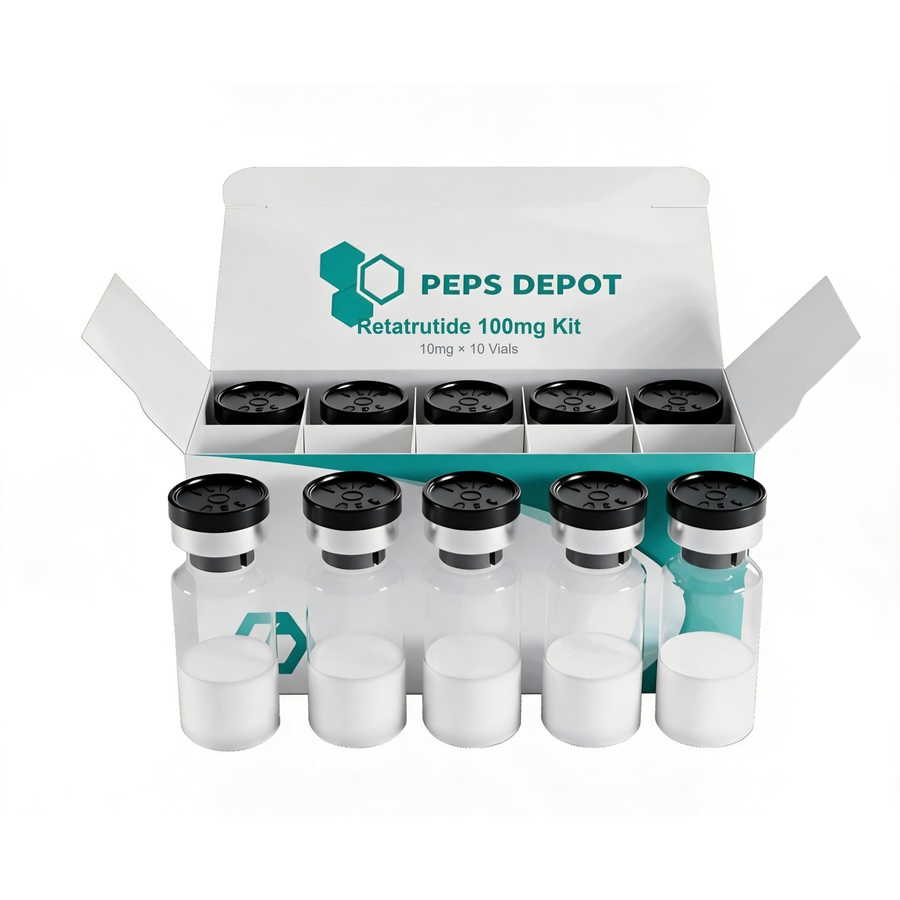
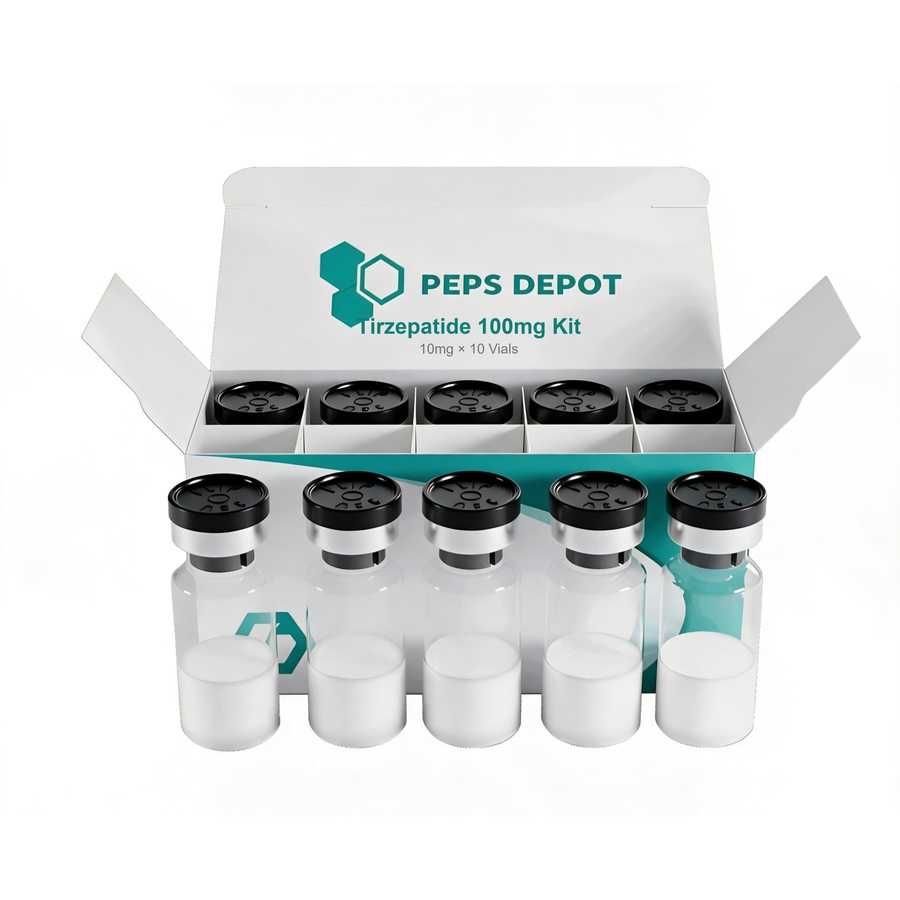
Both compounds are supplied lyophilized, third-party tested by HPLC and LC-MS, with a certificate of analysis matched to the lot number printed on your vial.
Published research overview
The evidence bases are not comparable in size, and that asymmetry is the most practically important thing in this comparison.
Tirzepatide has completed Phase 3. The SURPASS programme examined glycaemic endpoints; the SURMOUNT programme examined weight endpoints. Both produced large randomised trials published in major journals, with follow-on work examining maintenance, withdrawal and different populations.
Retatrutide has published Phase 2. That means smaller trials, shorter durations, and results that are informative but not confirmatory. Phase 3 exists precisely because Phase 2 results do not always hold.
When you see confident claims that one of these outperforms the other, check whether the source is comparing a Phase 2 result against a Phase 3 result. That comparison is not valid — different trial sizes, durations, populations and endpoints — and it is the most common error in coverage of these two compounds.
Body composition research
Weight is a crude endpoint on its own, because it does not distinguish fat mass from lean mass. A distinct strand of the tirzepatide literature uses imaging to separate the two during weight reduction — a question simple scale measurements cannot answer.
This matters for interpreting any incretin compound. The relevant research question is not only how much mass changes but what kind, and that requires imaging endpoints rather than weight alone. The tirzepatide literature has this; the retatrutide literature is younger and thinner on it.
Glucose and metabolic research
Both compounds act on incretin pathways central to glucose regulation, and both literatures examine glycaemic endpoints alongside weight.
Retatrutide's published Phase 2 work extends into hepatic endpoints — the MASLD trial examined liver fat content directly, which reflects the interest in what the glucagon component contributes to hepatic lipid handling. That is the clearest published signal of what the third receptor is being tested for.
Reconstitution and storage
Handling is identical for both. Bring the vial to room temperature before opening, add bacteriostatic water slowly down the inner wall rather than onto the powder, and swirl gently — never shake. Agitation introduces mechanical shear and aeration, and both degrade peptides.
Lyophilized and sealed, both are stable well beyond 24 months at −20 °C, and around 12 months refrigerated. Once reconstituted in bacteriostatic water and held at 2–8 °C, roughly 3 to 4 weeks. Neither requires cold-chain shipping — lyophilized peptide is stable at ambient temperature in transit.
Work out your concentration with the reconstitution calculator →
The studies
Every study below is indexed in PubMed and links to free full text. We link primary sources rather than summarising them second-hand, and links open in a new tab so this guide stays open behind them.
Retatrutide
Retatrutide-A Game Changer in Obesity Pharmacotherapy
Triple hormone receptor agonist retatrutide for metabolic dysfunction-associated steatotic liver disease: a randomized phase 2a trial
Efficacy and safety of retatrutide, a novel GLP-1, GIP, and glucagon receptor agonist for obesity treatment: a systematic review and meta-analysis of randomized controlled trials
Tirzepatide
Tirzepatide for Weight Reduction in Chinese Adults With Obesity: The SURMOUNT-CN Randomized Clinical Trial
Semaglutide vs Tirzepatide for Weight Loss in Adults With Overweight or Obesity
Continued Treatment With Tirzepatide for Maintenance of Weight Reduction in Adults With Obesity: The SURMOUNT-4 Randomized Clinical Trial
Citing a study is not a claim about what either compound does. These are primary sources provided so you can read the evidence and judge it yourself. All products are supplied for laboratory research use only and are not for human consumption.
Frequently asked questions
Is retatrutide the same as tirzepatide?
Is retatrutide stronger than tirzepatide?
Why does the glucagon receptor matter?
Which one has more published research?
Is retatrutide approved anywhere?
How do they compare with semaglutide?
Do they need different handling?
Ready to order?
Both third-party tested, COA per lot, shipped discreetly from the USA. See the full research index for every study we cite across the catalogue.