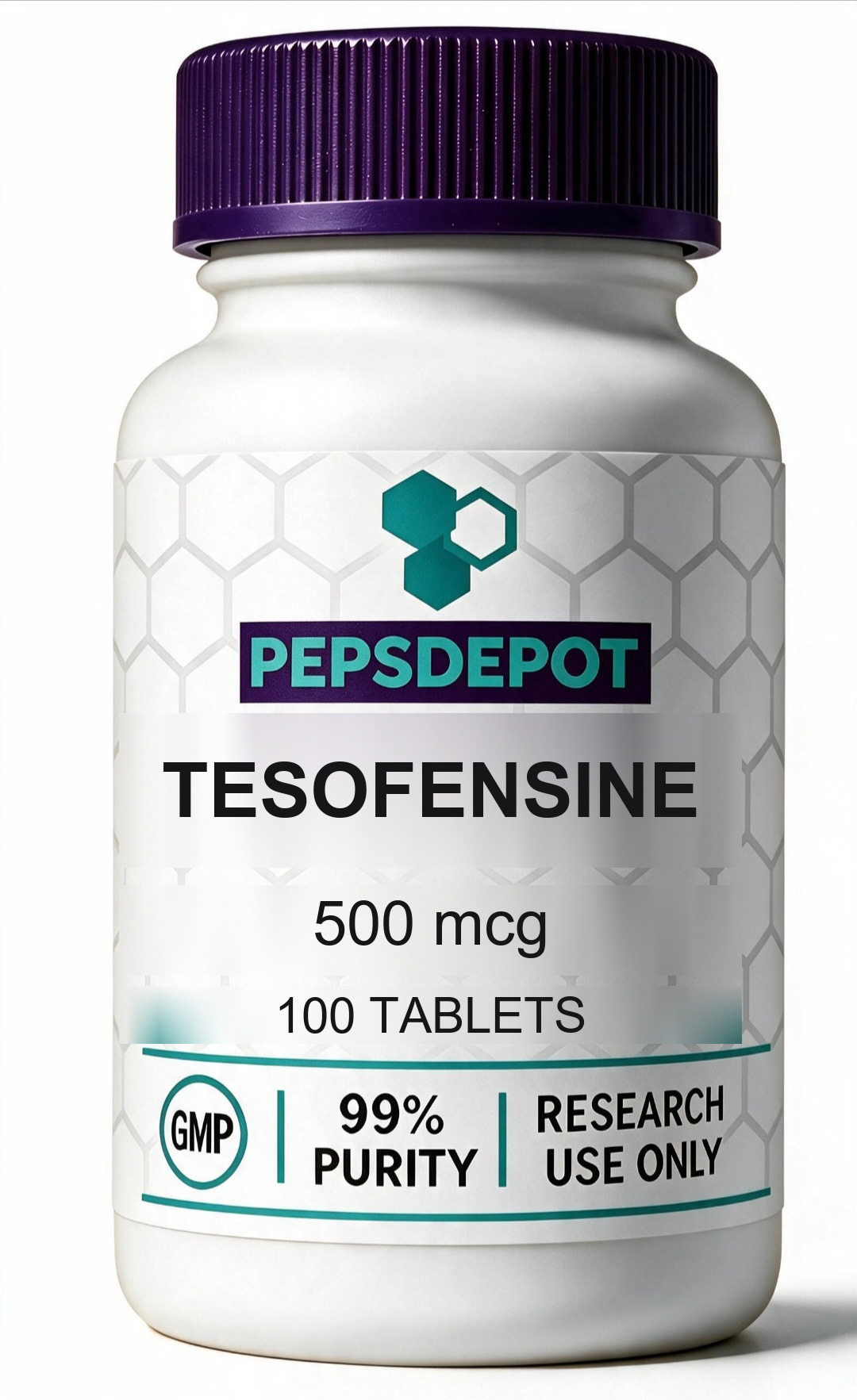
Tesofensine 500mcg
Tesofensine is a triple monoamine reuptake inhibitor, acting on the noradrenaline, dopamine and serotonin transporters. It has been examined in clinical research for its effect on energy intake. Supplied as pre-dosed tablets.
- ✅ Order today › 📦 Dispatch (2 business days) › 🚚 Delivery (3–9 business days)
- 🧪 Most lab-tested source in the industry
- ⭐ 500+ reviews across independent platforms
- 🔒 Secure checkout — Crypto, Cash App & Venmo
- 📦 Discreet packaging, guaranteed delivery
Product Details
| Form | Oral capsules — pre-dosed, no reconstitution |
| Purity | ≥99% (verified) |
| Storage | Cool and dry, sealed; protect from light |
| Batch | COA available on request |
Why Choose Tesofensine 500mcg?
Tesofensine is a triple monoamine reuptake inhibitor, acting on the noradrenaline, dopamine and serotonin transporters. It has been examined in clinical research for its effect on energy intake. Supplied as pre-dosed tablets.
Key Benefits
- Triple monoamine reuptake inhibitor
- Pre-dosed tablets — no reconstitution
- Third-party tested — COA available on request
- Ships from the USA in discreet packaging
About Tesofensine 500mcg
Tesofensine is a triple monoamine reuptake inhibitor, blocking the transporters for noradrenaline, dopamine and serotonin. Inhibiting all three distinguishes it from the selective reuptake inhibitors that dominate this drug class.
It has an unusual development history. Originally investigated for neurological indications including Parkinson's and Alzheimer's disease, it failed to meet its primary endpoints — but reduced energy intake observed during those trials redirected the programme entirely toward metabolic research.
Supplied as pre-dosed tablets for laboratory research use only. Not for human consumption.
Research background
Triple transporter inhibition
By blocking the noradrenaline, dopamine and serotonin transporters simultaneously, tesofensine raises synaptic availability of all three monoamines. Most clinical reuptake inhibitors target one or two; the three-way profile is what makes it pharmacologically distinctive.
Phase 2 clinical data
Unlike most compounds in this catalogue, tesofensine has published randomised controlled data in humans from its metabolic development programme. The evidence base is therefore clinical rather than purely preclinical.
Energy intake mechanisms
Research has examined whether the effect on intake is driven predominantly by the noradrenergic component, the dopaminergic one, or their interaction — the question being which transporter contributes what.
Repurposing history
The shift from a failed neurological programme to metabolic research is itself documented in the literature and is a frequently cited case study in drug repurposing.
Tesofensine has published Phase 2 human data but has not completed Phase 3 development and is not approved in the United States. Monoamine reuptake inhibitors carry cardiovascular and psychiatric considerations that are a substantial part of the published discussion.
Storage and stability
| State | Temperature | Practical shelf life |
|---|---|---|
| Sealed bottle, room temperature | 15–25 °C | To printed expiry |
| Sealed bottle, refrigerated | 2–8 °C | To printed expiry |
| Opened bottle, tightly closed | 15–25 °C | Months, if kept dry |
| Exposed to humidity | any | Degrades — discard |
Oral dosage forms are considerably more forgiving than lyophilized peptides. Capsules and tablets are stable at room temperature and require no cold chain, in transit or in storage.
Moisture is the real enemy rather than temperature. Keep the bottle tightly closed, leave the desiccant sachet in place, and avoid storing in a bathroom or anywhere humidity swings. Protect from direct light.
Purity and verification
Every lot is tested by an independent laboratory before release. HPLC establishes purity as a percentage of total content, separating the target compound from synthesis by-products; mass spectrometry confirms molecular identity.
For an encapsulated product there is a second question a vial does not raise: content uniformity. A capsule can be the right compound at the right purity and still be filled inconsistently, so Tesofensine is checked for fill weight consistency across the batch as well as for identity and purity.
The certificate of analysis references the lot number printed on your bottle label. Request it at [email protected].
Published research
Peer-reviewed studies indexed in PubMed. Each links to the abstract and, where a free copy exists, to the full text. We link primary sources rather than summarising them second-hand.
Tesofensine, a novel triple monoamine reuptake inhibitor, induces appetite suppression by indirect stimulation of alpha1 adrenoceptor and dopamine D1 receptor pathways in the diet-induced obese rat
Tesofensine, a novel antiobesity drug, silences GABAergic hypothalamic neurons
Centrally Acting Agents for Obesity: Past, Present, and Future
Frequently asked questions
What does 'triple monoamine reuptake inhibitor' mean?
Why was tesofensine originally developed?
How does it differ from a GLP-1 agonist?
Does this need refrigerated shipping?
Is a certificate of analysis available?
Do capsules need any preparation?
Customer reviews
Related products