Retatrutide vs Semaglutide
These sit at opposite ends of the incretin development timeline. Semaglutide is the established single-receptor agonist with the deepest published evidence base; retatrutide is the newest triple agonist, still in trials.
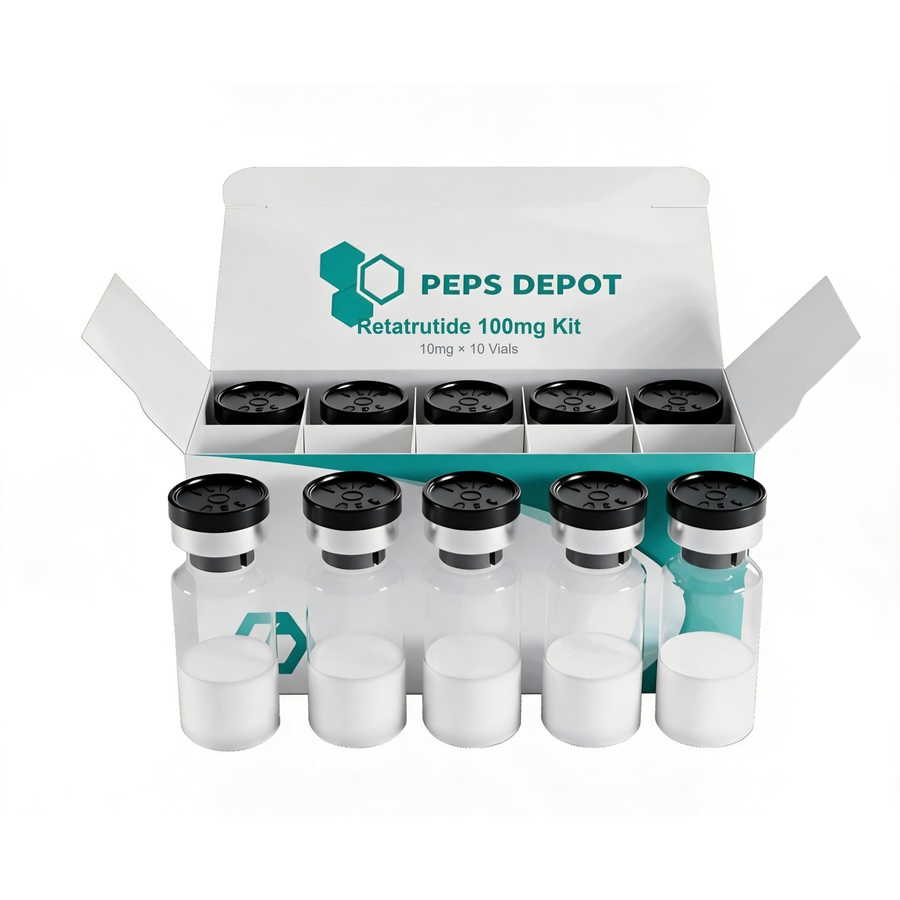
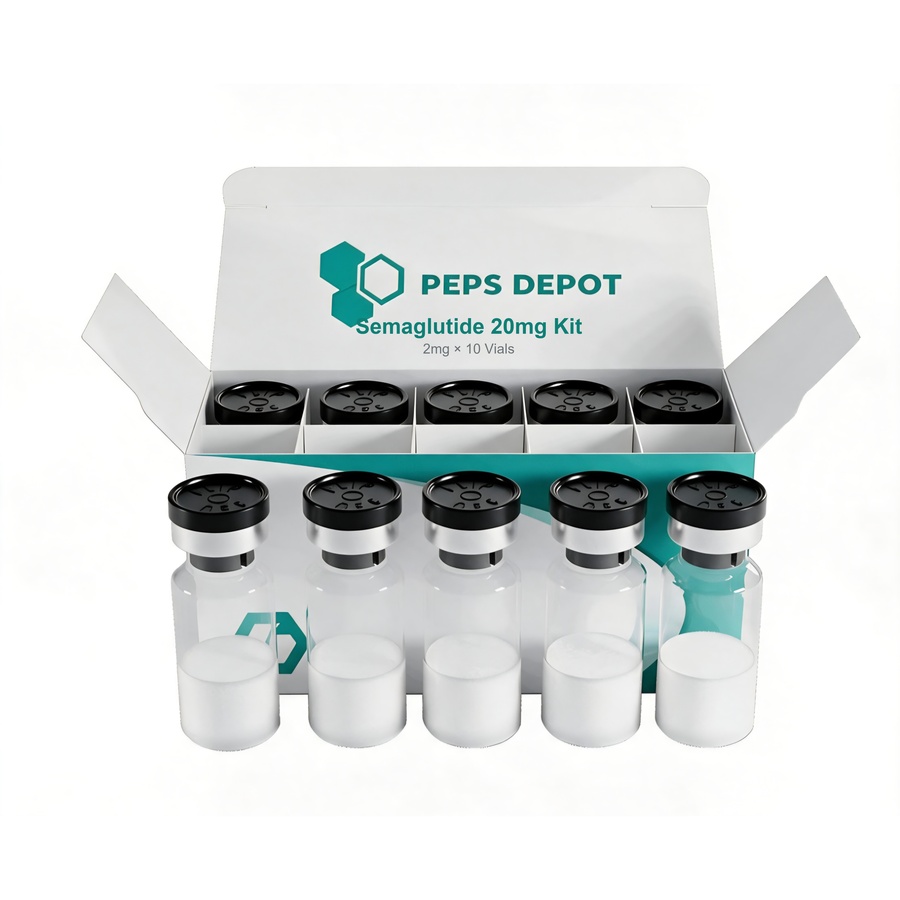
Semaglutide binds the GLP-1 receptor. Retatrutide binds GLP-1, GIP and glucagon receptors — three targets against one.
Side by side
| Retatrutide | Semaglutide | |
|---|---|---|
| GLP-1 receptor activity | Yes | Yes |
| GIP receptor activity | Yes | No |
| Glucagon receptor activity | Yes | No |
| Number of receptor targets | Three | One |
| Development stage | Investigational — Phase 2 published | Approved; extensive Phase 3 programme completed |
| Published human evidence | Phase 2 obesity and MASLD trials | STEP, SUSTAIN and SELECT programmes |
| Supplied as | Lyophilized powder | Lyophilized powder |
Choosing between them
Researchers work with retatrutide when
multi-receptor pharmacology is the subject — particularly the glucagon arm, which neither semaglutide nor tirzepatide engages.
Researchers work with semaglutide when
a well-characterised reference compound is needed. Its trial literature is large enough that it functions as the benchmark against which newer incretins are described.
Common questions
How many receptors does each one target?
Why is there so much more data on semaglutide?
This comparison covers structure, receptor targets and development stage — matters of published record. It does not rank the compounds or claim either produces better outcomes. Much of the supporting literature is preclinical. All products are supplied for laboratory research use only.