NAD+ vs 5-Amino-1MQ
Both appear in NAD+ research, but they approach the same question from opposite directions.
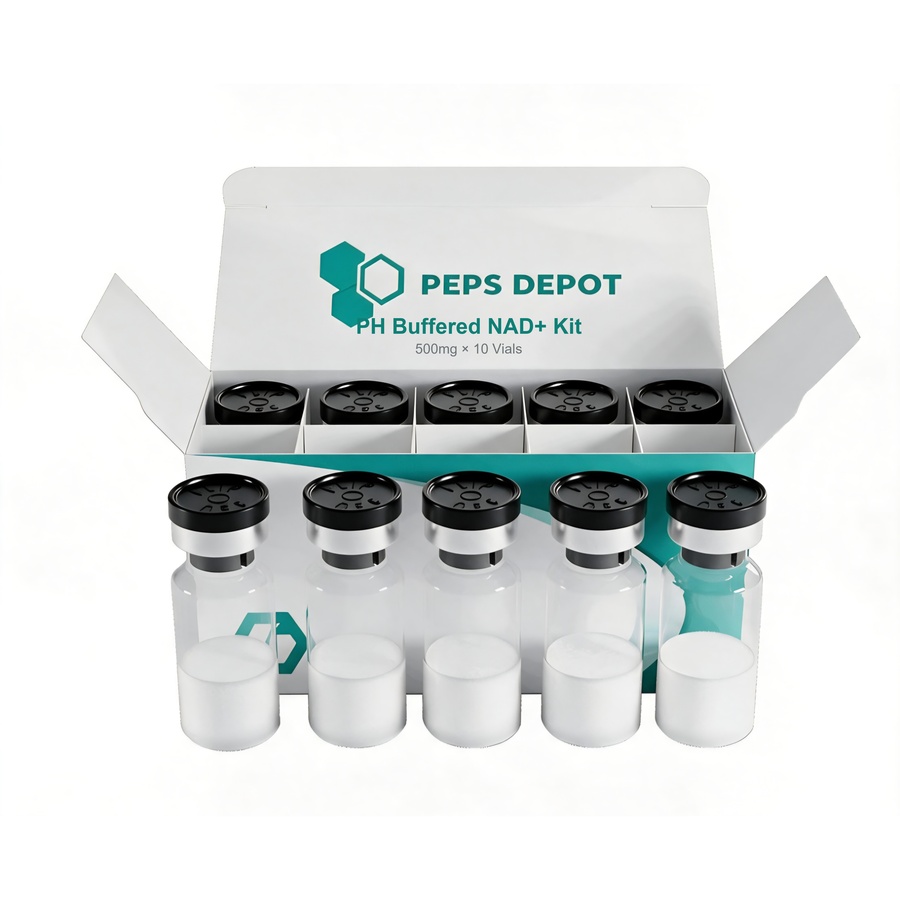
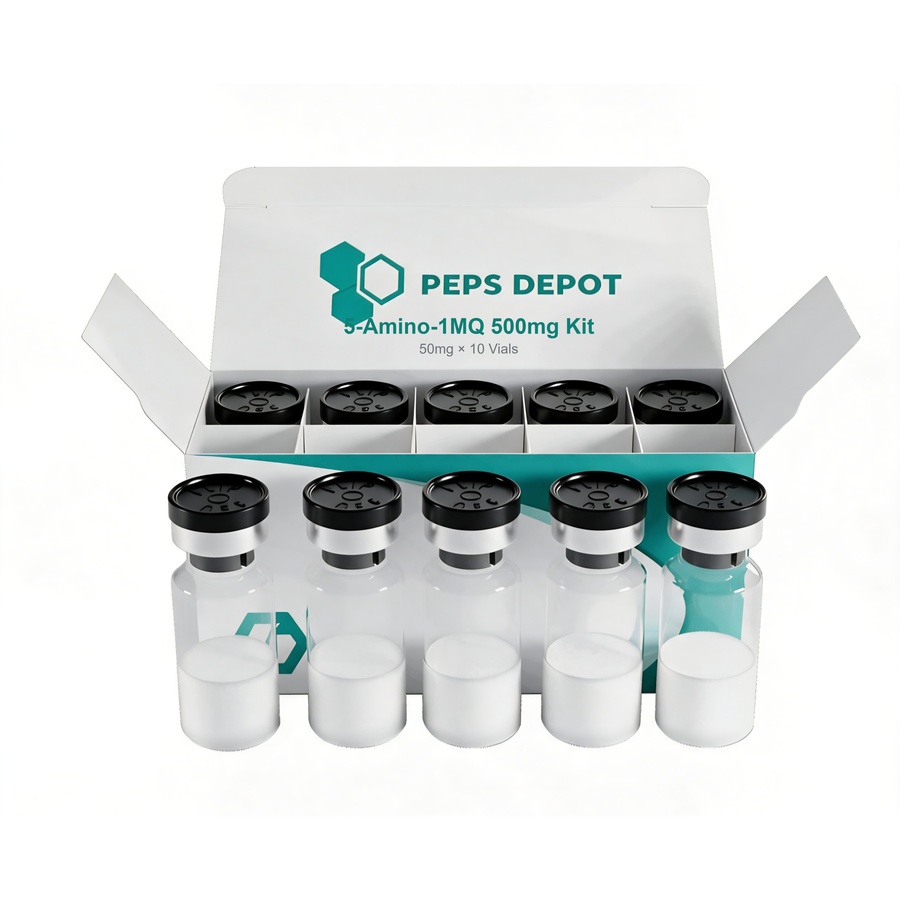
NAD+ is the coenzyme itself — supplying the end product directly. 5-Amino-1MQ is an enzyme inhibitor that blocks NNMT, reducing how much nicotinamide gets methylated and diverted away from the salvage pathway that regenerates NAD+. One adds; the other stops subtraction.
Side by side
| NAD+ | 5-Amino-1MQ | |
|---|---|---|
| Molecule class | Dinucleotide coenzyme | Small-molecule quinolinium |
| Is it a peptide? | No | No |
| Mechanism | Supplies the coenzyme directly | Inhibits NNMT, preserving nicotinamide for NAD+ salvage |
| Acts on | Redox reactions, sirtuins, PARP enzymes | The NNMT enzyme |
| Tissue focus in literature | Broad — energy metabolism, DNA repair | Adipose tissue and liver, where NNMT is highly expressed |
| Typical vial size | 100mg to 1,000mg | 50mg |
Choosing between them
Researchers work with NAD+ when
the question concerns the coenzyme pool directly — redox state, sirtuin activity, or PARP consumption during DNA repair. Supplying NAD+ is the direct approach.
Researchers work with 5-Amino-1MQ when
the question is about NNMT specifically, or about adipocyte energy metabolism. Its effect on NAD+ is indirect, which makes it a different experimental tool rather than a substitute.
Common questions
Is 5-Amino-1MQ a form of NAD+?
Which one raises NAD+ more?
Are either of these peptides?
This comparison covers structure, receptor targets and development stage — matters of published record. It does not rank the compounds or claim either produces better outcomes. Much of the supporting literature is preclinical. All products are supplied for laboratory research use only.